Why I Built Autom Insights
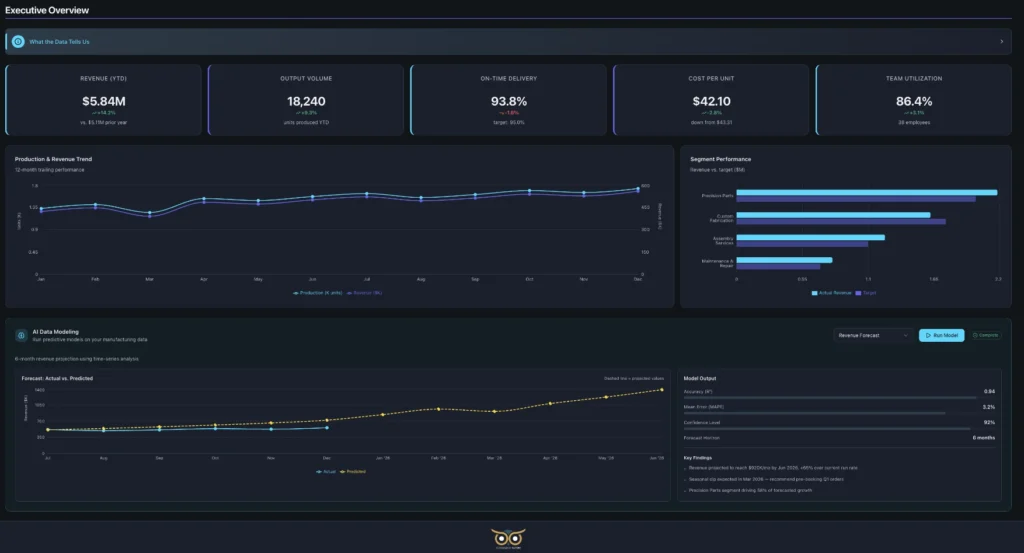
The Story Behind the Data
I’ve never been very good at pretending things make sense when they don’t or nodding along when something looks clear but isn’t. I’ve realized over the years that what I care about most isn’t data. It’s the story the data is trying to tell. I’m not comfortable making decisions based on numbers I don’t trust or reports that have to be explained away. I want to know what actually changed, what’s working, what isn’t, and what we’re learning next.
That instinct has followed me into every role I’ve had. More than once, I was hired to do one job and ended up building the visibility system anyway because once you see that the work and the results aren’t connected by a clear narrative, you can’t unsee it.
The Pattern I Couldn’t Ignore
In almost every place I’ve worked — manufacturing, public systems, private companies — there’s a moment that always shows up. Good people are doing meaningful work. Teams are putting in real effort. Money is being spent with the right intentions.
And then someone asks a completely reasonable question:
Why did we invest here?
What changed because of it?
What do we do next?
That’s when the room gets quiet. Not because no one cares. Not because nothing is happening. But because no one can show the story clearly.
The numbers exist, but they live in different places. Reports have to be rebuilt every time. Leaders are asked to stand behind data they don’t fully trust. Everyone knows the work matters, but connecting effort to outcome takes more time than it should and sometimes more confidence than people actually have.
After seeing that enough times, I stopped thinking of it as a reporting issue. It’s a visibility issue. We’re asking organizations to make high-stakes decisions without a system that can consistently show what’s true. And that’s also the moment where I started to become cautious about how people talk about AI. Because AI can’t solve that problem.
Why AI Isn’t the Starting Point
I’m building with AI. I believe in it. It’s going to change how all of us work. But AI doesn’t create clarity. It only accelerates whatever is already there. If your data definitions don’t match across departments, if your processes live in people’s heads, if finance and operations tell slightly different versions of reality, AI doesn’t fix that. It just gives you faster answers to the wrong questions.
You can automate a workflow. You can generate a narrative. You can build a beautiful dashboard. But you can’t automate trust. And speed without trust doesn’t help anyone, it just makes confusion move faster.
Where the Work Really Starts
Most people assume this kind of transformation starts with a new tool. It doesn’t. It starts with structure. It starts with taking scattered data and bringing it into a single, consistent foundation, agreeing on what things actually mean, and building reporting that reflects how decisions are really made, not how we wish they were made.
Once that foundation is in place, AI becomes incredibly powerful. It can turn trusted data into usable insight, automate the work that slows teams down, and generate narratives that actually mean something. At that point it’s no longer AI for the sake of innovation, it’s AI in service of clarity.
At the end of the day, this isn’t about technology. Every organization is already telling that story through its data. Most just don’t have a system that lets them see it. That’s the work behind Autom Insights.
We are building the structure that makes the truth visible so the work that’s already meaningful can finally be understood, trusted, and used to move forward.